Friday, July 18, 2008

An Undying Love: Love's False Start and Out Here

Photobucket

An Undying Love: Love's False Start and Out Here
[18 July 2008]

Two new reissues portray Arthur Lee's complicated life after "Forever".
by Charles A. Hohman


“Once I had a singing group
Singing group done gone
Now, I’ve got another group
Didn’t take too long”.
—Arthur Lee, “Doggone”

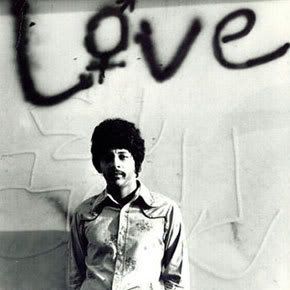
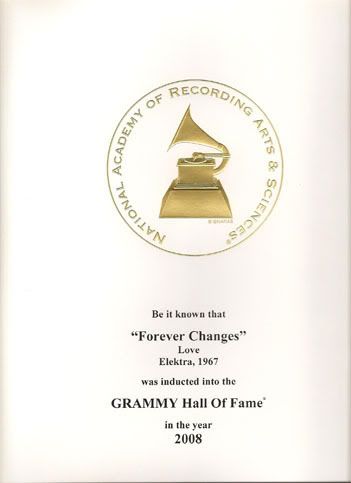
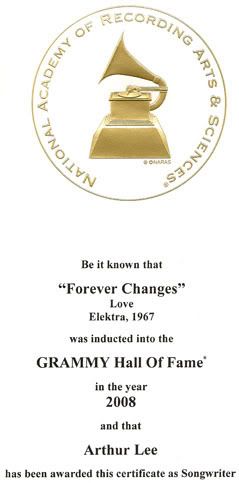
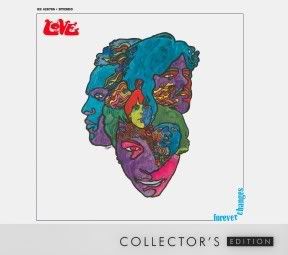
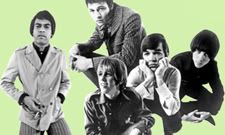
What happens when the life you expected to end continues? Such was the predicament facing Love frontman Arthur Lee, who famously recorded his mortality-obsessed 1967 masterpiece Forever Changes under the impression he’d been worm food within a year. While Forever did not mark the end of Lee, it did mark the end of Love, at least its original line-up. By 1969, the still-very-alive Lee had assembled an entirely new band under the same moniker: players who, unlike Bryan MacLean (author of Love classics like “Alone Again Or” and “Softly to Me”), wouldn’t question or infringe upon Lee’s often dictatorial leadership. Indeed, these Phase 2 Love albums often play like Arthur Lee solo discs, with new musicians offering backup rather than additional (possibly competing) perspectives.
Photobucket

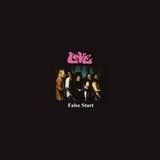
False Start
(COLLECTORS' CHOICE; US: 10 JUN 2008; UK: 26 MAY 2008)
AMAZON
Photobucket
Out Here
(COLLECTORS' CHOICE; US: 10 JUN 2008; UK: 26 MAY 2008)
AMAZON
After Four Sail, Love’s final Elektra album, the band moved to Blue Thumb Records, and promptly released the double album Out Here in 1969, and the ten-track False Start a year later. These first two Blue Thumb albums have recently been reissued on Collector’s Choice, and both illustrate Lee’s concerted efforts to distance himself from his old band, his old music, his old life, and his old self.

Culled mainly from the Four Sail sessions (a more cohesive, though not superior, album), Out Here is, like many two-discers of its time, messy, indulgent, sporadically brilliant and often infuriating. For example, “Doggone” is a lilting tune of loss, until it unravels on an eight-minute (!) drum solo. Many good tracks end too soon to feel complete, and many bad tracks squander early promise on meandering jams.

Like many of his contemporaries, Lee was consuming drugs pretty liberally at this point, and the music reflects this. “Signed D.C.”, a tender acoustic plea to Love’s drug-addled first drummer from the group’s debut, is reworked as a blistering rocker. Where on the original, Lee seemed distant and preachy when inhabiting the first-person perspective, he now seems to be living the drug fiend’s life. It’s a tacit there-but-for-the-grace-of-god-went-I moment: he demonically repeats the word “dealer” and omits the title entirely, thereby leaving the viewpoint unshifted. In essence, Lee has become D.C.

Out Here is full of stellar highlights: two brief and funny country songs (“Abalony”, “Car Lights on in the Daytime Blues”), two gospel-inflected ravers (“I’ll Pray for You”, “Run to the Top”), trippy drug songs (“I Still Wonder”, “You Are Something”) and some righteous throwaways, including “Discharged”, an obvious yet amusing anti-army rant that semi-blasphemously quotes “America the Beautiful”. Lee contributes his share of pretty tunes, but where Forever was meticulous and timeless, Out Here is often tossed off and dated. It has more in common with the garage-psychedelia of Love’s earlier albums than the folk-pop beauty of Forever. There’s little to impress those who adore Forever: Lee’s vocals are more forceful hard-rock strutter than stoic prophet, and his lyrics eschew epigrammatic wisdom for uninspired bromides.

This is even more evident on False Start. Love’s most blatantly commercial album since their 1966 self-titled debut. Less than half the length of Out Here, False ditches the psychedelic excesses for terse, cowbell-happy pub-rock. Supposedly, the album’s marquee track is “The Everlasting First”, which lacks any discernible hooks or insight but does feature some wah-wah wanking from one Jimi Hendrix, a phoned-in performance that, if uncredited, would be unidentifiable. And its lyrics are pretty puzzling: Lee begins with a love song, and ends up talking about the unjust persecutions of Jesus, Lincoln, and MLK.

As a no-frills rock album, False Start is perfectly serviceable, diverse even. But as a Love album, it falls short, due more in part to lyrical superficiality than radio-ready concessions. Lee’s more pessimistic inclinations are masked, or chemically suppressed, with a hollow, up-with-people mentality. The man who once warned of water turning to blood and shooting bluebirds now sings of riding vibrations and sunshine. “Open up your heart and let the sun come shining in”, he suggests, a far cry from the fire-and-brimstone sermons he once recited. For finger-wagging sage advice, Lee can do no better than “You’re gonna reap just what you sow / I’m here to let everybody know / If you don’t do your best, you’re gonna find yourself in an awful mess”. “Stand Out”, a lesser track from Out Here, is duplicated in a rudimentary and no more impressive live version, and jaunty goofs like the immaturely titled “Slick Dick” (where Lee even admits “I know what it sounds like but it ain’t”) and “Gimi a Little Break” (note the Hendrix-fied spelling) further trivialize the album.

However, only in their weakest moments do these albums prove difficult, unpleasant listens: the band is tight and funky, the melodies are generous, and Lee is a versatile pop singer, probably more versatile than Hendrix even. It’s just that Lee is or was capable of so much more than these simplistic exercises. The double meaning of Love (hey, it’s an emotion, and it’s also the band name) is toyed with repeatedly, as on the eleven-minute “Love is More Than Words or Better Late Than Never” and “Love is Coming”, which might as well be a Monkees-esque self-referential theme song. At the end of “Keep on Shining”, Lee repeatedly shouts the word “love”, as though it’s imprisoning him, keeping him from shining, in fact.

And perhaps that’s the lesson of these albums. Forever Changes is a work not simply of prophecy, but finality, digging the grave for ‘60s idealism before the movement even peaked. In its aftermath, both Love the band and love the concept are debunked myths and irrelevant jokes. The man who once proclaimed “the things that I must do consist of more than style” is now prizing style over substance. On Out Here and False Start, Lee has become a casualty of that which he once railed against: it’s a sad, harrowing portrait of one more artist harnessed by the shadow of his own masterpiece, and the certainty of his own convictions. In that respect, these albums represent the shortcomings of peace-love utopianism every bit as much as Lee’s more regularly heralded work.

Tuesday, June 03, 2008

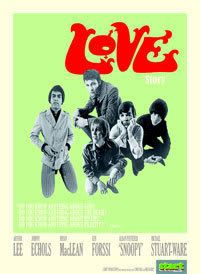
:: The Playlist ::: Arthur Lee Documentary "Love Story' Due July 29 On DVD

Arthur Lee Documentary "Love Story' Due July 29 On DVD

Photobucket

Via one of my fave new reads "The Playlist"

"The feature-length documentary about mercurial frontman Arthur Lee and his proto-psychedelic rock band Love, will finally see a release on DVD later this summer on July 29."

"Produced and directed by first-time film makers Chris Hall & Mike Kerry, "Love Story," the film was originally shot in 2005 and '06 and had its world premiere at the 50th London Film Festival in October 2006 (its US premiere came in 2007 at the Los Angeles Film Festival, but never did find a regular theatrical release.

http://bedazzled.blogs.com/bedazzled/2008/05/arthur-lee-docu.html


:: The Playlist ::: Arthur Lee Documentary "Love Story' Due July 29 On DVD

Photo Sharing and Video Hosting at Photobucket

Photobucket

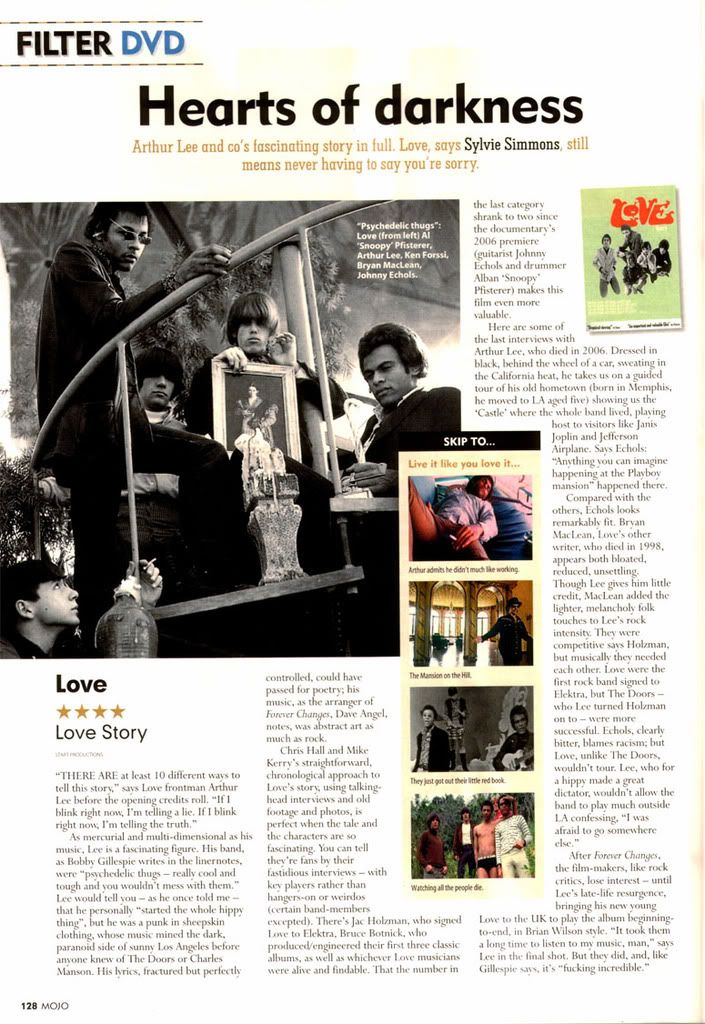
thankful to Torben for Mojo review
http://love.torbenskott.dk/default.asp

Friday, May 23, 2008

ARTHUR LEE DOCUMENTARY COMING TO DVD

Photobucket
Photobucket
ARTHUR LEE/LOVE DOC COMING THIS JULY TO DVD
By Liz Lawson on May 20, 2008 1:12 PM
Categories: Film & TV, Music, News
On July 29, much to the relief of Haddaway, we will all finally know for sure what Love is. For the first time, Love Story, the feature length documentary about seminal Arthur Lee-fronted Los Angeles rock band Love, will be released on DVD in the States.
One of the first interracial pop bands in the United States, Love boasted musicians Jim Morrison and Jimi Hendrix as fans, but never found commercial success, due in part to the mentally and physically unstable lead singer Lee. It also likely had something to do with the fact that all of the band's members but Lee were heroin addicts, and that Lee refused to tour and consistently turned down festival appearances. The frontman eventually spent many of the last years of his life in prison for possession of firearms, before passing away in 2006 from acute myeloid leukemia.

Regardless of the bands personal strife, Love made some incredible music, and the band's third album, Forever Changes, stands today as one of the crowning achievements of rock music. (Look forward to a review of the Deluxe Edition in Paste's July issue!)

The documentary features interview time with Lee shortly before his death, as well as the other original members of the band, and footage of Love guitarist Bryan McLean, who died of a heart attack on Christmas day in 1998. Considering the colorful history that the members of the band have, Love Story should be well worth watching.


Photobucket


Love Documentary Coming to DVD, Late LPs Reissued
Photobucket
Last year, Pitchfork reported about Love Story, a documentary about the legendary psychedelic folk/pop band Love, as well as reissues of a couple Love albums that came after their 1967 classic Forever Changes. Now, the movie is coming to DVD, and those records are getting a wider reissue on a different label.

Start Productions will release Love Story on DVD July 29. The documentary delves into the legacies of Love and bandleader/frontman Arthur Lee, who died of leukemia in 2006. In addition to interview footage with Lee himself, the movie contains interviews with all of the original band's surviving members, Primal Scream's Bobby Gillespie and Mani, the Doors' John Densmore, Elektra Records' Jac Holzman, and Lord Mayor of London Ken Livingstone, among others.

Love Story also features rare footage of Love and previously unreleased footage of late band member Bryan MacLean. The DVD includes an hour of bonus material, and Bobby Gillespie wrote the package's liner notes.
As for the reissues, they are of 1969 double album Out Here and 1970's False Start, both originally recorded for the Blue Thumb label and reissued last year in a limited edition box set called Love: The Blue Thumb Recordings. These new reissues come out June 10 on Collectors' Choice and give the albums separate, less limited releases.

Out Here and False Start are notable for a more electric sound than Forever Changes, due to the fact that Lee almost entirely reassembled Love's lineup following Forever Changes' release. False Start even kicks off with "The Everlasting First", a song co-written by Lee with Jimi Hendrix and featuring Hendrix on guitar.


Posted by Dave Maher in dvd, reissue on Fri: 05-16-08: 11:30 AM CDT


LOVE STORY 14 -Arthur Lee on Jimi Hendrix


Arthur Lee Revisits The Castle

Saturday, May 10, 2008

OUR NEVER ENDING LOVE FOR ARTHUR LEE

Photobucket
DUBLIN, IRELAND

Our never-ending love for Arthur Lee

Photobucket
Enduring: many of Arthur Lee's songs on the 1967 album Forever Changes are still pertinent

By Eamon Sweeney
Saturday May 10 2008


There are only three albums in existence that I've bought more than once, namely, Loveless by My Bloody Valentine, The Velvet Underground & Nico and Forever Changes by Love.

Normally, the music industry's obsession with re-issues is little short of a scam to fleece fans, forcing them to buy the same album time and again, but the re-release of Forever Changes is a different matter.

On its original release in 1967, the album failed to make an impact, peaking at 154 in the Billboard charts. However, it has aged remarkably well and is regarded as one of the greatest albums ever made.

Bob Dylan once said that people are still living off the table scraps of the Sixties. Put on Forever Changes and you realise how right he is. Modern alternative musicians such as Belle & Sebastian and Calexico owe a massive creative debt to the world's first multi-racial psychedelic band.

It's impossible to reduce Forever Changes to a single soundbite such as "psycheldelia" or "rock". Mariachi horns, strings, intertwining guitars and folk and baroque elements fuse to produce one of the most singular set of songs recorded.

The album's subject matter and tone were completely out of synch with flower power and the summer of love. Love's frontman and main songwriter Arthur Lee said: "When I did that album, I thought I was going to die at that particular time, so they were my last words."

Lee wasn't just an eccentric musician -- he was a certified crackpot. Love's drummer Bryan McClean said that when he first met Lee, he was, "so strange and unusual that at first sight I couldn't determine his gender". Elektra Records boss Jac Holzman said: "Arthur is not of this world. He lives in a world of his own creation."

During the Watts race riots of 1965, Lee drove through the chaos every day to check that his mother was safe. She was light-skinned enough to be mistaken as white, while Arthur was involved in a scene and industry where he was a black man in a mainly white world.

In the same year that Forever Changes was released, Joan Didion published Slouching Towards Bethlehem, a collection of essays named after a line from Yeats' The Second Coming. Issues Didion explored include hippies, murder and the disintegration of self-respect and morality in modern America. Forever Changes could well be its soundtrack.

According to the author and journalist Jon Savage: "The songs on Forever Changes consistently hit the places where the political chaos of the time became indistinguishable from the psychic chaos."

One of the most striking and unsettling songs is The Red Telephone, a track that lifts its title from the nickname for the phone that the US President might use to call Moscow to declare nuclear war. "They're locking them up today," sings Lee. "They're throwing away the key. I don't know who it will be tomorrow -- you or me?"

Thankfully, Forever Changes isn't some kind of terrifying post-hippie burn-out album about paranoia. Listening to Forever Changes is an uplifting and beautiful experience. The final track, You Set the Scene, is one of the most heartening and positive songs ever recorded.

After writing his masterpiece, Lee rapidly sunk into a spiral. He was sentenced to 12 years' imprisonment in 1996 for repeated drug and firearm possession charges. However, he served six years and even managed to tour in 2002 and play his first Irish show, in the Ambassador.

On his release, Lee said God frequently appeared to him in prison, always repeating the same statement: "Love on earth must be."

Bizarrely, Lee was honoured at Westminster in 2002 by a motion led by Labour MP Peter Bradley. Lee was greeted by the strange sight of MP Stephen Pound dropping to his knees, giving Lee a Wayne's World "We're not worthy" welcome.

In 2006, Arthur was diagnosed with acute myelogenous leukaemia. Despite chemotherapy and a bone marrow transplant, he died on August 23, 2006. Since his death, young bands such as Clap Your Hands Say Yeah and the Dears have repeatedly cited Lee and Love as a major influence.

Forty years after its original release, Forever Changes sounds as fresh and startling as ever. The famous line on A House is Not a Motel, "The news today will be the movies of tomorrow", is as pertinent now as it was in the late Sixties.

Not all of the best records are instant classics. Indeed, in his book on Forever Changes, Andrew Hultkrans cautions: "Be forewarned: Forever Changes initially resists interpretation, even ordinary enjoyment, and requires many spins before it casts its odd spell; once it does, though, it will beguile, baffle and thrill you for your remaining days."

- Eamon Sweeney

Backstage Pass: A conversation with Love's Arthur Lee, Part II

Photobucket

Backstage Pass: A conversation with Love's Arthur Lee, Part II
Goldmine writers

Photobucket

Love was psychedelic rock. R&B. Folk and blues. The band was at the forefront of the Sunset Strip ’60s, and singer-composer Arthur Lee was driving the train. He was friends with Jimi Hendrix and formed an interracial band before the guitarist ever entertained the notion. Love’s Forever Changes album rearranged everything — horns and strings and zigzag vocals.

At the time of this interview in 1975, Arthur Lee had disappeared himself for some three years. He was now back with a reformed Love and an album called Reel To Real. It is not Da Capo, nor is it even close to Forever Changes, but it is Love, and sometimes that’s all you need.

Do you remember where the name Love came from?

Arthur Lee: It was immediately after I heard that someone ripped my name off, The Grass Roots. There was a guy who was established, or whoever did it, he must have been established. He had the name copyrighted and all that, man.

I trusted people. I didn’t think anybody was gonna steal my name. It wasn’t my name, actually. But anyway, I think the reason I called the group Love was because rather than to hate somebody for stealing something from you, man, maybe you should love them. It would be a different approach to the whole trip. You dig it?

So, that’s how I got the name Love. I was riding on the freeway, trying to think of another name. “Well, Grass Roots is gone, call it Love?”

How did you meet up with Elektra?

AL: Elektra met up with me, man. Jac Holzman came to Bido Lido’s. He came with Herb Cohen, Mickey Cohen’s nephew. That was my first manager. He came to Bido Lido’s, man, and tried to pull a fast one.

They thought I was 26 or 27, and I signed a contract. If you sign a contract and you’re not 21 — I don’t know how the law goes today, and I didn’t yesterday either. And I sure ain’t gonna be thinking about it tomorrow (laughs)! But if you’re not 21, or you don’t have your parent’s consent or so-called judge’s consent, then f**k it, man, the contract is nowhere. So, I knew that, I knew that, man. I went ahead, and did that album with those people. I just thought up a name, Grass Roots Publishing; I lost the Grass Roots name for the group so stuck it on as the publishing company. It says Grass Roots Productions. And what happened was they found out that I wasn’t 21 when I signed that contract, man, so anything that I signed, anything didn’t matter. You dig?

So, Herb Cohen forged my name. And I had a handwriting expert under an attorney here in L.A., Al Schlesinger. “Yeah, this is legit.” I don’t see why I’d lie; it’s not important, but that’s what went down. What it was, as I said in the beginning of this particular bit, was I just thought you couldn’t have 100 percent of your publishing. I was 19, 20. I didn’t know, man.

But anyway, I gave this guy half the publishing, man. I wanted it back after I was 21 naturally, so what I had to do was buy it back. I paid five grand, got my publishing back from a guy who never had the publishing in the first place. If I could ever find that piece of paper, I got a lawsuit, you know? I’m going out and sue that motherf**ker, man!

No, that’s stupid. But, whatever.

Photobucket

How long was Love together before you recorded the first album?

AL: Well, we were the Grass Roots, you know, like I told you, and then all was changed was just the name change, man. We were together about six months, eight months, something like that.

Was this all stuff that you had been playing in clubs?

AL: No. We were playing “Smokestack Lightning” and “Little Red Book” and things that other people wrote and did. But I hadn’t gotten into my own thing, so when I had a chance to do an album, of course, [I said] “First thing, I’m gonna do ‘Little Red Book’ and make sure it sells.” You know what I mean? And then I’ll throw all the rest of my shit on there, man, and maybe people will go for that, too. So, it was a chance, and it’s turned out pretty good as far as I’m concerned.

Were you surprised?

AL: Yeah. What I expected actually, man, was to retire after the first album. I went through so many changes with them dudes in the studio the first time around, man. I figured, “Yeah, I’ll go through these changes with these people, because I know this record is gonna do it for me. I’ll just kiss it goodbye and retire at 21 like I planned.” Well, I’m 29 now, and I ain’t retired, man. As a matter of fact, do you got a couple bucks at the moment (laughs)? Ten albums later, shit. Same old story. S-O-S, Same Old Shit.

There were 14 songs on the Love album, which was pretty remarkable at the time.

AL: There could have been 20, man, at least. It was the first album, man; I had written all these f**kin’ songs, gone around to all these f**kin’ record companies, and every time I got turned down or somethin’, every time I went through some so-called bummer, man, I try to write somethin’ good to overcome the bad feeling that I got. I wrote “Andmoreagain” like that for sure. Here I am, upstairs with a chick that I dig, and the next thing I know, Bryan’s f**king her downstairs (laughs). There’s “And more again” and more and more and more and more, again and again and again. F**k it; it’s cool.

So on the first album, you were just trying to put down all the different kinds of things you were going through and all the different music you had in your head? There are a lot of styles on there.

AL: Yeah, man, there are, there are. The musicians weren’t up to par in the studio, man. We played so much better live. I wanted to make sure I got my foot in the door, so I wrote all those songs, and we did those songs. But we didn’t do the songs that we were drawing all those f***ing people by as The Grass Roots, you dig?

Forever Changes is kind of a big jump from the second album.

Photobucket

AL: To you. I can understand how you can say that and other people. To me, I’ve never had a big jump. I’ve never jumped big at all. I’m not meaning that I haven’t done a big thing or anything, but I mean the way you said that…

There were more instruments, and I think the songwriting itself had progressed.

AL: I had to try it out. I was feeling my way. Like from the first album, if they dig that then maybe I’ll get a chance to do another album.

Then, maybe I’ll get a chance to do my thing. My thing was the Forever Changes album. That’s when I finally got a chance to do my thing, and I wasn’t worried about whether the public was gonna buy it or whatever.

Forever Changes took a while to record.

AL: Yeah, it did. It took longer because the guys... they got headstrong or something. Neil Young came in, and he was supposed to produce the Forever Changes album. He had all these studio guys down in there, and I’m spending all this bread. And then my group would come down and check these guys out; then they’d go out to the studio.

The bass player would tell the studio bass player what to play. And I’d say, “Well, what the f**k? If you knew what to play, how come you didn’t do it?” Because we went in the studio and tried to do that song, and those dudes were somewhere else, man. So, after seeing my money go down the drain, those motherf**kers, then they got it together enough to do at least what they did on Forever Changes — which I think is still mixed wrong. The engineer at the time, Bruce Botnick and I, we were really at a poor understanding of who he thought he was and I knew I was him anyways (laughs). I knew he was me anyway.

Why not just produce it yourself?

AL: I produced Vindicator myself. But why not produce it myself at that time? Because I still didn’t understand… I didn’t know how far I could go. I started off singing and playing the accordion and all that stuff; I didn’t know how far. When it got into things like business, the organizations like publishers and producers and all of that, I didn’t know. I didn’t know if I could do that or not. That’s why I didn’t produce; I did produce it, though!

Was the band doing much touring during this period?

AL: We weren’t doing anything, but we were up and down the West Coast. What they wanted us to do was go and eat shit. I just wasn’t going for it, because I had my $50 a month pad; I was eating every day. And I just didn’t see why I had to go out on the road and eat shit. You know? Like The Doors came along right after us, and they went out and ate shit, and Elektra did everything for them. A little shit goes a long way.

If they had set up some good tours for you, would you have gone out?

AL: I went out. I went out, man. We did the best we could.

I mean if they had taken care of you more. You just seem bitter about going out on the road.

AL: I wasn’t bitter, man. I wasn’t. I just didn’t feel like going that’s all. It was either I was so young, it was either my hair wasn’t long enough or I didn’t have the right kind of pants on. Now, that’s how stupid the trip was. No shit.

Did you think going on the road might help you sell more albums?

AL: I always thought that if something was good, it would get through anyway — whether you went out on the road or not. There’s a guy now, Barry White — how many times has he been out on the road?

Next thing you know, he’s playing at the Hollywood Bowl! Now, I don’t know how many people came or what, but I know that the dude ain’t no work-at-the-Whiskey-six-months-and-then-go-to-the-Troubadour. But he’s selling; he’s got the #1 record now, and he’s doing all this shit now. That’s why I thought it was gonna happen for me.

For the Four Sail album, you got an entirely new band.

AL: On Four Sail, it was spelled F-O-U-R, but it was really like a For Sale sign in front of a house. I needed some bread. So the group was for sale. No shit.

You were fed up with them?

AL: Well, Elektra, yeah. I had done the last thing for Elektra, and they didn’t do me no justice as far as the way I look at it, man. Maybe they would have if I had applied myself better than I did, but I didn’t, and they didn’t. So f**k it. For sale! Love’s for sale, who wants to buy?

(Bob) Krasnow came along, Blue Thumb Records. He bought it. That’s cool, you know. I wanna tell you something right now, man. I ain’t never been on a record company that I didn’t try to do my best. A lot of people can say that this guy goes from record company to record company just for the front bread or whatever and jacks them up. That is bullshit, man. Anything that I do, I want to make sure that I do it the best that I can. It may not sound good sometimes to you or even to me, but man, I try to do my best.